
|
By Stefan
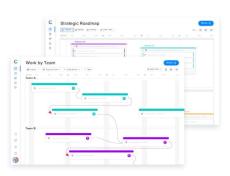
Most agile teams have a roadmap. Far fewer have one that the team actually follows. The gap is usually structural: the roadmap was built for a presentation, not for daily planning. It shows features and rough timelines, but nothing that connects to sprint work. When priorities shift, the roadmap stays frozen while the backlog moves on. An agile roadmap that works is built differently.
|
By Stefan
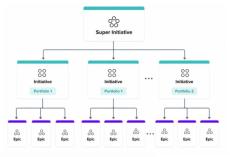
Managing one product is hard. Managing a portfolio of products across multiple teams, market segments, or business units is a different problem entirely. Individual product managers focus on what to build next and why. As a VP of Product or CPO, your job is to make sure the right products get investment, that teams are not duplicating work or blocking each other, and that the entire portfolio is pulling toward the same business objectives.
|
By Stefan
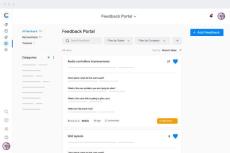
Every product team feels it eventually. The backlog grows. Sales forwards another customer email. An executive champions a feature because one big account asked for it. And suddenly, the roadmap is being driven by whoever spoke loudest or most recently rather than by what will actually move the product forward. Managing feature requests without a structured process means your team spends time building things that feel urgent but aren’t strategic.

|
By Stefan
Product feedback management is the process of collecting, organizing, and acting on input from customers, internal teams, and stakeholders about your product. That input might be a feature request from a key account, a bug report from a power user, or a pattern of complaints surfacing in support tickets. The goal is not just to gather that input – it is to turn it into decisions. Which requests get built? Which get deprioritized? Which reveal a deeper problem the team has not yet named?

|
By Stefan
Most product teams carry two versions of the truth. The roadmap lives in a slide deck, a spreadsheet, or a dedicated roadmap tool. The actual work lives in Jira. Product managers update one, engineers update the other, and neither stays in sync for long. The cost is real. When a feature slips in Jira but the roadmap still shows it shipping next sprint, stakeholders get false confidence. When engineering adds scope in Jira without it appearing on the roadmap, the product strategy quietly breaks.
|
By Stefan
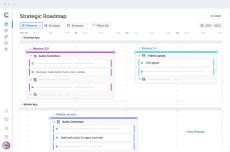
Most product teams outgrow their first roadmap tool before they realize it. A spreadsheet works fine when you have one product and three stakeholders. Once you’re managing multiple workstreams, collecting feature requests from customers, and trying to connect strategic goals to what engineering is actually building, the cracks appear fast. This guide covers what to evaluate when you’re ready to move to a purpose-built product roadmap tool.
|
By Stefan
Product operations is the function that keeps product teams running efficiently at scale. When your organization has multiple product managers, several product lines, and a growing backlog of strategic decisions, ad-hoc coordination stops working. Product ops software gives the people managing that function a single place to standardize how product work gets done, track what’s happening across the portfolio, and make sure strategy connects to execution.
|
By Stefan
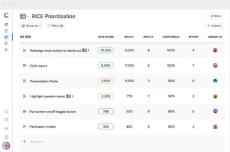
Every product backlog has more ideas than time. Sales wants the enterprise feature that closes deals. Engineering wants the refactor that prevents outages. Customers keep requesting something you promised two quarters ago. Without a shared framework, these conversations become political, and the loudest voice in the room wins. A prioritization framework gives your team a repeatable way to evaluate features against each other using agreed-on criteria.
|
By craft.io Team
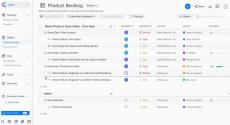
Product operations (product ops) is the function that keeps a product organization running smoothly as it scales. If product management is about deciding what to build and why, product ops is about making sure those decisions get made consistently, communicated clearly, and connected to the teams doing the actual work.
|
By craft.io Team
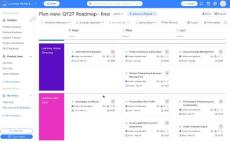
If your team already runs on Jira, Jira Product Discovery probably looks like an obvious next step. It lives inside the Atlassian ecosystem, surfaces ideas from your engineers and stakeholders, and links those ideas directly to Jira issues. For teams that want lightweight idea capture without leaving Atlassian, it does that job reasonably well. The question worth asking before you commit is: how much of product management are you actually trying to support? Idea capture is one slice.
|
By Craft-io
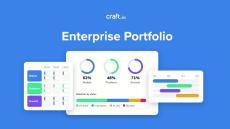
Learn how to bring multiple portfolios, divisions, and product lines together into one unified space using the Enterprise Portfolio in Craft.io. In this video, we cover: Happy Crafting!
|
By Craft-io
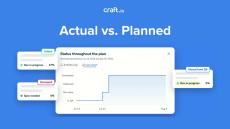
Learn how to use the "Actual vs. Planned" feature in Craft.io to track changes, monitor delivery, and evaluate project baselines against real progress. In this walkthrough, you'll learn: By leveraging locked plans and real-time comparative data, product managers can communicate changes with confidence, hold productive stakeholder reviews, and refine future quarterly planning.
|
By Craft-io
What are we building and why? For many product organizations, answering this simple question is incredibly difficult. Product managers often find themselves stitching stories together across fragmented tools—from feedback inboxes and prioritization spreadsheets to stale road map decks and disconnected development tasks.
|
By Craft-io
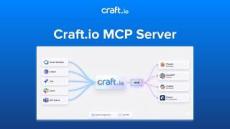
During this session we showed how the Craft.io Model Context Protocol (MCP) takes on real, day-to-day friction for three key roles.
|
By Craft-io
Your product data is now part of the context your AI works in. With the Craft.io MCP connected, agents can search, read, and act directly in your workspace. Ask your LLM to pull everything related to a topic, and it searches across feedback and work items, retrieves the relevant specs, and reasons about all of it together. No browsing. No tab switching. No gaps.

|
By Craft-io
See how to integrate Microsoft Teams with the craft.io feedback portal to simplify collecting stakeholder and customer feedback. The integration enables teams to capture feedback directly in Microsoft Teams, where they already work, and automatically sync it to Craft.io.

|
By Craft-io
In this session, Haim and Joe discuss how Product Managers can confidently navigate shifting priorities, build stakeholder alignment, and keep teams moving forward, without the chaos.

|
By Craft-io
In this video, we’ll show you how Craft.io empowers product teams to effectively manage and connect high volumes of customer feedback using the Feedback Table. As the operational heart of feedback management, the table gives you a clear, structured way to move from raw feedback to customer-driven priorities. You’ll learn how to.
|
By Craft-io
How Capacity Planning Works in Craft.io - Full Walkthrough In this video, we’ll show you how Craft.io empowers product teams with smarter, more predictable capacity planning. Whether you’re planning an upcoming sprint, aligning resources across multiple teams, or adjusting scope as priorities shift, Craft.io gives you the clarity and control you need to deliver confidently.
- October 2026 (2)
- September 2026 (9)
- August 2026 (2)
- June 2026 (3)
- April 2026 (2)
- March 2026 (4)
- February 2026 (2)
- January 2026 (2)
- December 2025 (1)
- November 2025 (2)
- October 2025 (2)
- September 2025 (3)
- August 2025 (2)
- May 2025 (1)
- March 2025 (1)
- February 2025 (2)
- December 2024 (1)
- November 2024 (1)
- October 2024 (3)
- September 2024 (1)
- August 2024 (3)
- July 2024 (3)
- June 2024 (2)
- April 2024 (1)
- February 2024 (6)
- December 2023 (1)
- October 2023 (1)
- August 2023 (3)
- July 2023 (2)
- June 2023 (1)
- May 2023 (5)
- April 2023 (6)
- March 2023 (6)
- February 2023 (5)
- January 2023 (5)
- December 2022 (1)
- October 2022 (2)
- September 2022 (5)
- August 2022 (1)
- July 2022 (3)
- May 2022 (2)
- April 2022 (2)
- March 2022 (9)
- February 2022 (10)
- January 2022 (3)
- December 2021 (4)
- November 2021 (2)
- October 2021 (3)
- April 2021 (3)
- February 2021 (1)
- January 2021 (1)
- December 2020 (2)
- November 2020 (6)
- October 2020 (1)
- July 2020 (3)
- June 2020 (4)
- May 2020 (7)
- April 2020 (5)
- March 2020 (2)
- January 2020 (3)
- December 2019 (3)
- November 2019 (2)
- October 2019 (6)
- September 2019 (2)
- August 2019 (1)
- July 2019 (1)
- May 2019 (2)
- January 2019 (1)
- June 2017 (11)
The best-in-class platform for product managers. Elevate your product management workflow to build and launch the products your customers really want.
Use our planning tools to articulate and connect your product vision, strategy, and personas to goals, initiatives, and product features. Easily prioritize what to build next and plan efficient work with your dev team. Create visually compelling roadmaps to give your customers, management and teams insight into your product decisions and let them know what’s coming up. It’s quick and easy to LiveShare them with internal and external stakeholders.
Benefits:
- Get everyone on the same page with plans, roadmaps, and strategy: Inspire and lead your organization with a compelling, well-communicated product plan. Bring stakeholders on-board with beautiful roadmaps and motivate teams with clearly defined features.
- Turn feedback and ideas into more innovative products: Use the ideation portal to easily aggregate, prioritize, and convert user feedback and product ideas into what you build next. Integrate with Intercom, SalesForce, and Zendesk, and set up customizable workflows.
- Customized onboarding to build better products, fast: Get familiar with our intuitive interface. Have all your questions answered quickly. Our premium onboarding service provides personalized training for your employees and teams.
- Deploy with confidence: Craft.io offers data encryption, a private cloud, SSO logins with multiple providers and enterprise-class SLAs.
Craft.io is the ultimate product management software for your entire product lifecycle.