

Teams | Collaboration | Customer Service | Project Management

The latest News and Information on Project Management, Methodologies, Productivity and Tools.

New reporting columns give you a clearer view of project profitability

We've added a batch of new columns to custom reports and the profitability report, so you can see revenue, cost targets and effective rates without exporting data or building formulas yourself. If you run delivery or finance for a services team, these are the numbers you check most, now sitting right where you report. This is part of our ongoing work on financial reporting. Less digging, more answers you can trust.

Nifty: AI Workflow Builder

Describe the work you manage and Nifty builds the project around it: the statuses, the lists, and custom fields already set to the right type. In this video we build a real project from a single sentence, walk through the preview, and change everything before creating it. What's covered Why it is useful Setting up a project usually means renaming columns, adding lists, creating the fields you need, then remembering the one you forgot. This does that part for you, and nothing is committed until you press Create Project. Everything stays editable afterwards.

When everyone has an agent, alignment becomes the bottleneck

Something changed over the last year that most teams have not fully adjusted to yet. A year ago, one person on the team was often “the one using AI.” Today, almost everyone is. Designers have assistants. Engineers use Claude, Cursor, or both. Product teams run research through ChatGPT or Gemini. Marketing teams use AI to draft campaigns, and support teams use it to summarize issues and prepare responses. Individually, people are producing more than they were a year ago.

How to Build an Ops Handbook in 9 Easy Steps

You know how things work. The question is whether your team does—or whether that knowledge walks out the door the moment you do. Our research into 303 professional services firms found that only 21% have documented best practices. The other 79% are running on institutional knowledge. Which means onboarding takes longer, quality depends on who’s staffed on a project, and every departure walks out with know-how nobody wrote down. Most ops leads already know this.

The benefits of capacity planning: protect your margin, your deadlines, and your team

Most teams treat capacity planning as an operations chore, something the resourcing spreadsheet handles on a Monday. That framing is why so much client work loses money without anyone seeing where. Capacity planning is the lever that decides whether the work you win is actually profitable to deliver, and this guide walks through the benefits one by one so you can build the case for it and act on it.

Revenue Up 2x, EBITDA Up 5x: The Operating Model Behind It with Andrew McBarnett

Everyone wants AI to fix their messy data. Andrew McBarnett will tell you straight: it won't. In fact, it'll just help you reach the wrong conclusion faster. Andrew is Group Financial Director at Lucid Group, a PE-backed medical communications agency. He joined in 2020 for what was meant to be a four month contract. Six years later, he's still there, and the numbers tell the story: EBITDA up from £3.6m to £18.1m, revenue more than doubled, legal entities cut from 25 to 15, and a finance team that's shrunk in headcount while transaction volume has nearly doubled.

The PSA Software Buying Guide: How to Tell If You're Ready (or Not)

Most professional services automation (PSA) buying guides exist to sell you a PSA. This one might actually talk you out of it. A PSA is the most powerful platform a services firm will ever buy. But it only amplifies what’s already there. If your operations and processes are a mess, a PSA won’t fix that. It’ll just help you scale the mess, faster. It’s only worth the investment once your foundation is solid.

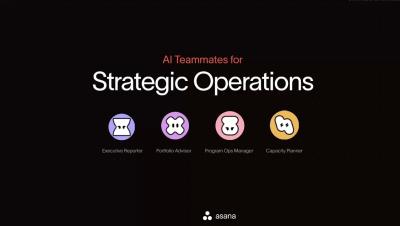
Let AI handle the daily tasks that slow you down

Knowledge workers spend more than half their time on work that isn't their actual work. Sorting requests. Writing status updates. Following up on things that were supposed to be done last Tuesday. According to Asana's State of AI at Work 2025, that number is 55% of the workday — busywork that AI can now absorb, if you set it up right. Download the report.