

Dr. Sahar Yousef is a cognitive neuroscientist and leading expert on productivity, as well as a faculty member at UC Berkeley’s Haas School of Business. She teaches a popular MBA class, “The Science of Productivity and Performance,” and has been featured in Forbes, The Wall Street Journal, Wired, and Business Insider.
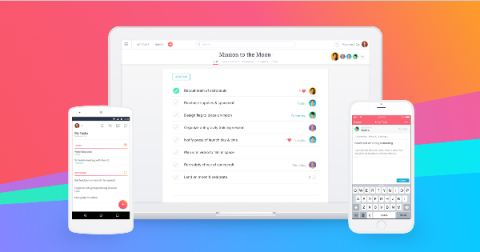
At Asana we’re big on knowing who’s doing what by when—and that includes knowing when your own tasks are due. That’s why we created My Tasks—your one-stop-shop for viewing all of the work assigned to you in one central place. Whether you’re new to Asana or an Asana power user, My Tasks is the best way to make sure none of your work falls through the cracks. View your tasks in List, Calendar, or Board View, and create custom sections to make My Tasks work for you.
When it comes to starting a business, many entrepreneurs are drawn to the freedom of earning money on their terms. That doesn’t mean it doesn’t come without its challenges. One of the most common struggles we face is finding an adequate work-life balance. Anyone who is an entrepreneur knows and understands the many hats you have to wear and the tasks you have to juggle each day, especially when you’re starting out.
The past year has been a year of adversity. From the pandemic to racial injustice, many people have been faced with multiple types of adversity. And while there are societal changes that need to happen to overcome these challenges, there’s a lot we can do as individuals to fight adversity within an imperfect system. We recently had the privilege of learning from Laura Huang, who joined us for a virtual talk at Asana focused on how to turn adversity into advantage.
Extreme stress is now an all too familiar component of work. Last year, 71% of workers felt burnt out at least once. Additionally, the number of workers assessing their mental health as poor, or very poor, rose from 5% to 18%, with 42% rating their stress levels as high or very high. This elevated stress and pressure is a clear sign of the times.
At Asana we’ve grown a lot since going remote just over a year ago. We’ve grown into different schedules, work environments, and overall as people. We grew even more as a company, with almost 500 new Asanas joining us remotely from all over the world, who have never gotten the chance to meet or collaborate with their teams in person.
Entrepreneurship is tough no matter who you are. Yet, for a long time, the entrepreneurial journey has been especially challenging for women. In the US, despite owning 40% of all businesses, females receive less than 3% of venture funding. The discrepancy is especially concerning given research that shows women return twice as much revenue per dollar invested than men.