
Teams | Collaboration | Customer Service | Project Management

Why Custom Fulfillment Workflows Need Communication Built for the Job

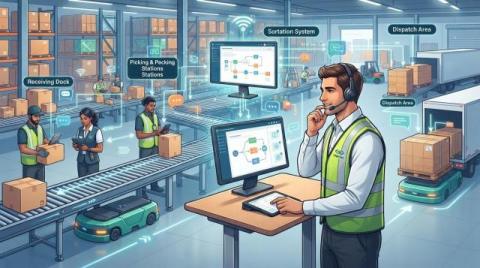
Online retail, store replenishment, subscriptions, and wholesale orders all move through a warehouse differently. Treat them the same and you get delays, extra handling, and inventory that nobody quite trusts. That is why more businesses are moving away from one-size-fits-all fulfillment and building processes around their own products, channels, and customers.
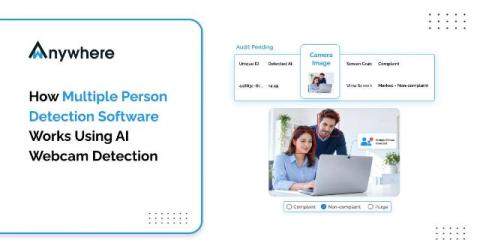
How Multiple Person Detection Software Works Using AI Webcam Detection

Multiple person detection software uses AI webcam analysis to count the people in front of a work screen and alert security teams when anyone other than the authorized user appears. It runs face and person detection on sampled frames, tracks faces over time, verifies the logged-in employee, and applies policy rules such as blurring the screen or locking the session.

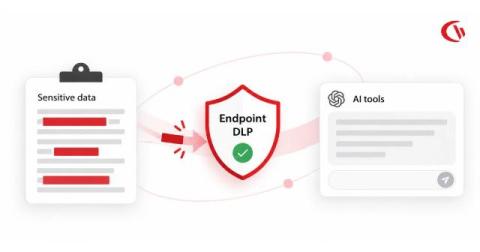
How to Prevent Sensitive Data Copy-Pasting into Generative AI Tools: Endpoint DLP Best Practices

Generative AI has transitioned from a novel innovation to a critical workplace productivity tool. Employees are rapidly adopting various generative AI tools, including Microsoft’s Copilot, ChatGPT (OpenAI), Claude (Anthropic), etc., to code, summarise, interpret, answer questions, and accelerate tedious business processes.

AI-Generated Content in Team Communication: How to Set Guidelines That Work

A product manager posts a status update in the team channel on a Tuesday morning. It is four tidy paragraphs, bolded headings, a closing line that says the team “remains committed to delivering value.” Two engineers react with a thumbs up.

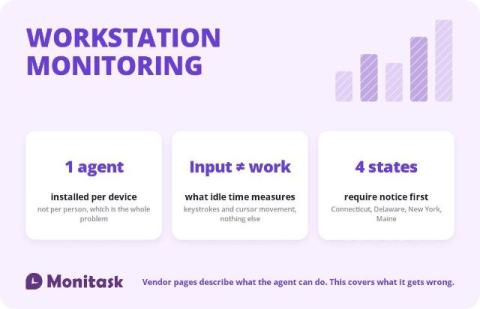
Workstation Monitoring

Workstation monitoring is the device-level layer of employee monitoring: a software agent installed on a computer that records application and website use, active and idle periods, and optionally file events and screenshots. Every product page in this category explains that the agent is lightweight, deploys by Group Policy and keeps recording when the machine is offline. All true.

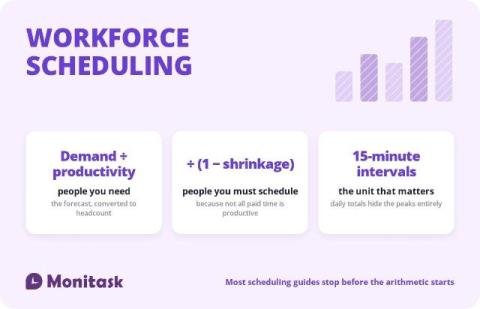
Workforce Scheduling

Workforce scheduling is the process of matching staffing to demand across time, within a labour budget and whatever rules apply to your workforce. Every article on the subject agrees on that definition, lists the same components, and then moves to software. The part that decides whether a schedule works is quantitative, and three numbers do most of the work: Miss the second one and you will be understaffed by roughly a quarter every single week while your headcount looks correct on paper.

How ARM Creative runs full-service marketing campaigns with Asana AI

At ARM Creative, a single campaign can span broadcast TV, over-the-top (OTT) ads, radio, Spotify, paid social, display, and retargeting—all running at once, each with its own deadlines, specs, and approvals. It used to be that campaign updates lived in email threads, while feedback was scattered across Slack and inboxes. Without a shared system, it was difficult to see whether a deliverable was approved, in progress, or falling behind.