
A common part of a growing company’s journey is beginning to build and sell multiple products, along with the original one you used to launch the business. As that happens, your relationship with customers will necessarily evolve and you may need to reconsider what customer-centricity looks like for your brand.
Your customer service team is made up of a variety of humans, each with different levels of knowledge. That comes with risk. Someone who is new or unfamiliar with a certain issue could say the wrong thing and fail to provide the solution a customer needs. For that reason, many organizations employ scripts within their call centers. Call center scripts clearly lay out what a customer service representative is supposed to say in response to a specific problem.
And by maps, I mean the blog post below...
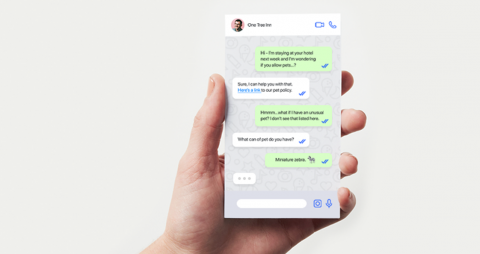
With over seventy-two trillion messages sent in 2018 across messaging channels like WhatsApp and Facebook Messenger, it’s no surprise that 68% of consumers choose messaging as their preferred way to communicate with businesses. Customers are growing more comfortable with sending a message to a business just like they would to their friends and families—it brings an extra degree of convenience and familiarity to the customer experience.
Have you ever overheard people having heated discussions about the differences between help desks, service desks, and IT service management (ITSM)? Surprisingly, we have. Some argue that help desk is an outdated term referring to an IT-centric support capability born in the late 1980s (think mainframes), with little attention to the end user. They may say service desk was coined to describe a new focus on serving end-users in a timely manner.