


|
By Time Doctor
November 9, 2026 Quick overview: Monitoring employee attendance works best when every hour your distributed team logs has a verified record. Time Doctor keeps that record, so payroll, billing, and process compliance can rely on it. That matters because 3.2% of full-time U.S. employees miss work time in an average week (BLS, 2025). Payroll runs on attendance data. So do client billing, overtime planning, and most staffing decisions.

|
By Time Doctor
November 11, 2026 Quick overview: An employee attendance sheet records who worked, when they started and stopped, and how many hours they put in each day, week or month. Below, you can download three free templates in Excel, PDF and Google Sheets. You will also learn what each sheet should include, how to fill it out and where manual sheets fall short. For teams whose hours feed payroll, client billing or a compliance review, a verified time record removes most of that manual work.
|
By Time Doctor
November 10, 2026 Quick overview: To monitor employee internet usage accurately and ethically, start with a clear business question and check the law where your people work. Next, publish a written policy before you track anything. Then capture web and app data only during work hours, share it with employees, and act on patterns instead of single moments. Time Doctor supports this approach by tying web and app usage to the projects and tasks behind every tracked hour.
|
By Time Doctor
November 6, 2026 Quick overview: Employee monitoring laws in the US, UK, EU and Canada generally allow employers to monitor work activity, but each sets its own rules on notice, purpose and scope. In the US, federal law permits most monitoring of company systems for business reasons, while New York, Connecticut, Delaware and Maine also require notice. Under GDPR and UK GDPR, you need a lawful basis, clear information for workers and monitoring that is proportionate.
|
By Time Doctor
November 2, 2026 Quick overview: To monitor employees working from home without losing their trust, set expectations and capture only the data each role needs. Then let employees see the same data you do. Time Doctor, used by 10,000+ distributed teams, shows the time, tasks, and tools behind each workday as it happens. This guide covers six steps: expectations, what to capture, one live view, results, check-ins, and well-being.
|
By Time Doctor
How to get visibility into how your team works without micromanaging or losing their trust Quick overview: Employee monitoring software helps businesses track how teams spend their work time across remote, hybrid, and in-office settings. This guide covers what it is, how it works, what the law requires, and how to implement it in a way your team will actually trust.
|
By Time Doctor
The privacy, legal, and productivity considerations behind employee screen monitoring, plus smarter alternatives for modern teams Quick overview: Employee screen recording can help managers track performance, enforce company policies, and support IT troubleshooting. But it also comes with serious drawbacks: legal risks across multiple jurisdictions, employee trust issues, and a surveillance culture that can quietly drive up attrition.
|
By Time Doctor
Performance management has been broken in most organizations for a long time. It was designed for offices, where managers could track progress through proximity and ambient visibility. Remote work removed the ambient visibility. AI is now removing the need for most traditional performance proxies.
|
By Time Doctor
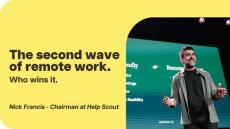
The first wave of remote work had a low bar. Companies went remote because a pandemic gave them no choice. Being remote at all was the differentiator. The second wave is different. It is voluntary, which means it is competitive. Companies now choose whether to offer remote flexibility. Which means the employees choosing to work for them have genuine alternatives. According to Buffer, 98% of workers want remote work at least some of the time. 46% would consider leaving if forced back to office full-time.
|
By Time Doctor
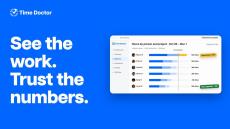
When your team is distributed, the work is hard to see. Time Doctor gives you one clear view of how your distributed team actually works. In this video: Chapters Time Doctor is used by 10,000+ distributed teams. Product screens are illustrative, with sample data.
|
By Time Doctor
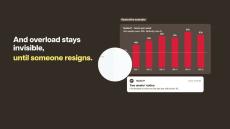
Most leaders of distributed teams run on status updates and gut feel. Time Doctor gives you one clear view of how your distributed team actually works. In this video: Chapters Time Doctor is used by 10,000+ distributed teams. Product screens are illustrative, with sample data.
|
By Time Doctor
Who's stretched, and who has capacity? Ask in plain language and get the answer in seconds, from your team's real tracked hours. No exports. No spreadsheet rebuild. Time Doctor AI is on every plan. Use it in Time Doctor or right inside the AI tools you already use: Microsoft Copilot, Claude, ChatGPT and Gemini. What you can ask: Built to hold up: permissions are set for each person, and every number is computed from your tracked hours, never guessed. Time Doctor holds ISO 27001 and SOC 2 Type 2 certifications and supports GDPR and HIPAA requirements.
|
By Time Doctor
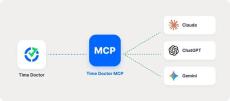
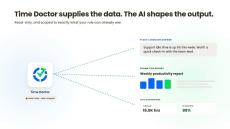
Time Doctor, now in Claude, ChatGPT, and Gemini. Ask your workforce data a question instead of exporting a report. In this video, Time Doctor shows how the Time Doctor MCP connects your Time Doctor data to the AI tools your team already uses. Ask about your distributed team in plain language, refine the answer with follow-up questions, and put Time Doctor hours next to your payroll, CRM, and project data in one place, without stitching spreadsheets together.
|
By Time Doctor
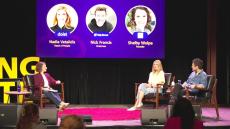
A manager copy-pasted a ChatGPT response to an employee's sick message, including the prompt fragment. The employee saw it. The trust damage was disproportionate to the effort saved. At @RunningRemote 2026, Nadia Vatalidis (Head of People, @todoist ) and Nick Francis (Chairman, @hellohelpscout ) discussed where AI belongs in performance management, and where it absolutely does not. Our take: AI can handle 90% of the synthesis work. Aggregating peer feedback, summarising months of data, addressing the recency bias that has always distorted annual reviews.
|
By Time Doctor
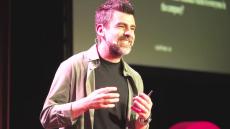
98% of workers want remote work at least some of the time. 46% would consider leaving if forced back to office full-time. Remote is no longer a differentiator. It is the floor. At @RunningRemote 2026, Nick Francis, Chairman of @hellohelpscout, introduced the Remote Excellence Audit, five dimensions that separate organizations that are remote by policy from organizations that are remote by design.
|
By Time Doctor
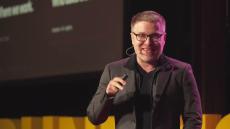
Remote work has stabilised. The debate about where people work is settled. The harder question is what performance looks like when AI can produce a full presentation in 78 seconds. In this clip from Running Remote 2026, Liam Martin (Co-founder, Time Doctor) introduces the performance equation for the next decade of distributed work: decisions x quality, divided by time. When the cost of production collapses, human value becomes a function of judgment -- not hours logged or deliverables delivered. Judgment.

|
By Time Doctor
Time Doctor helps organizations understand how work gets done with workforce analytics that turn activity data into actionable insights. Managers can identify productivity trends, improve performance, support employee wellbeing, and make better operational decisions with confidence. See how Time Doctor can help your team work smarter and achieve better results.

|
By Time Doctor
Learn how to use Time Doctor reports together for deeper insights. Connect data, spot hidden trends, and make faster, smarter decisions with side-by-side report analysis.

|
By Time Doctor
Get a fast, practical tour of Time Doctor’s newest features — your complete productivity toolkit — designed to help you work smarter while keeping trust and balance at the center.
- November 2026 (8)
- October 2026 (4)
- September 2026 (4)
- August 2026 (2)
- July 2026 (2)
- June 2026 (6)
- May 2026 (11)
- April 2026 (12)
- March 2026 (10)
- February 2026 (6)
- January 2026 (8)
- December 2025 (7)
- November 2025 (10)
- October 2025 (5)
- September 2025 (3)
- August 2025 (13)
- July 2025 (14)
- June 2025 (7)
- May 2025 (3)
- April 2025 (12)
- March 2025 (15)
- February 2025 (15)
- January 2025 (18)
- December 2024 (1)
- November 2024 (9)
- October 2024 (17)
- September 2024 (15)
- August 2024 (20)
- July 2024 (18)
- June 2024 (14)
- May 2024 (31)
- April 2024 (39)
- March 2024 (50)
- February 2024 (44)
- January 2024 (15)
- December 2023 (17)
- November 2023 (19)
- October 2023 (26)
- September 2023 (16)
- August 2023 (21)
- July 2023 (24)
- June 2023 (19)
- May 2023 (8)
- April 2023 (7)
- March 2023 (5)
- February 2023 (13)
- January 2023 (11)
- December 2022 (5)
- November 2022 (8)
- October 2022 (11)
- September 2022 (7)
- August 2022 (20)
- July 2022 (31)
- June 2022 (35)
- May 2022 (28)
- April 2022 (11)
- March 2022 (31)
- February 2022 (45)
- January 2022 (39)
- December 2021 (57)
- November 2021 (40)
- October 2021 (49)
- September 2021 (30)
- August 2021 (23)
- July 2021 (25)
- June 2021 (49)
- May 2021 (33)
- April 2021 (38)
- March 2021 (33)
- February 2021 (14)
- January 2021 (15)
- December 2020 (11)
- November 2020 (5)
- October 2020 (4)
- September 2020 (13)
- August 2020 (17)
- July 2020 (4)
- June 2020 (9)
- May 2020 (7)
- April 2020 (5)
- March 2020 (8)
- February 2020 (3)
- January 2020 (5)
Time Doctor is a time tracking and productivity monitoring software for remote teams. Our goal with the software is to help individuals and organizations to be more productive when working remotely.
Our mission is to enable effective remote work and improve productivity in remote teams. We are able to communicate that to our over 50 employees in more than 16 countries worldwide as well as the thousands of businesses around the world that now use Time Doctor every day.
Time Doctor features:
- Time Tracking: See time spent working and tasks and clients.
- Screenshots: Automatic screenshots monitor user activity.
- Integrations: Integrates with all leading project management tools.
- Reporting: Comprehensive reports show all tracked time.
- Payroll: Process payment for clients and employees.
- Cross-Platform: Desktop, tablet and mobile.
- Web & App Usage: See time spent on individuals apps and websites.
- Time Use Alerts: Automatic alerts keep employees on task.
- Client Tracking: Track time and billing to specific clients.
Want to make sure your remote team is actually getting work done? Remote teams average 22% more productivity with Time Doctor.