
Teams | Collaboration | Customer Service | Project Management

The latest News and Information on Time Tracking, Timesheets and related technologies.

Workstatus Updates v6.18: New Reporting Suite, Client Portal Enhancements & Smarter Workflows

The latest Workstatus release is here with powerful new reporting capabilities, expanded Client Portal features, and a smoother experience across your entire workspace. In this video, you'll discover: Advanced Reporting Capacity & Bench Report for smarter resource planning Billable vs. Non-Billable Hours Report for utilization insights Timesheet Submission Report for improved compliance Cleaner report organization with pinned reports, scheduling, exports, and email sharing.

IT Services Utilization Benchmarks: Are You Above or Below Profitability?

Ever feel like your team is busy, but profitability is still inconsistent? This is a very common challenge for many IT service teams: they work at full capacity, yet the stronger margins don’t always follow. In service businesses, utilization plays a very important role in profitability.

How to Give Clients Project Visibility without Giving Them Full Access

For agencies, giving clients project visibility often comes down to two imperfect options: manual reports that take time to prepare or broad access to a tool that can expose internal information. This guide shows how to create a controlled project visibility model that gives clients the right information at the right level of detail without handing over the keys.

How to Manage Remote Employees: The Honest, Practical Guide That Actually Works in 2026

Managing remote employees requires clear expectations, structured communication, transparent time tracking, outcome-focused productivity measurement, and the right tools to improve accountability, engagement, and performance.

Employee Availability: Meaning, Examples & How It Works

Employee availability refers to the days and times an employee is able or willing to work. Teams use availability to support staffing, shift coordination, schedule planning, and attendance visibility. The term differs from a work schedule, which refers to the specific shifts or hours an employee is assigned and expected to work.

Operational Intelligence vs Traditional Workforce Reporting

Most organizations have access to a large amount of workforce data. They track: Yet operational problems still happen. The problem is not a lack of data. The problem is that traditional workforce reporting mainly looks at the past. Modern operations need visibility into what is happening right now. This is why more organizations are adopting operational intelligence software.

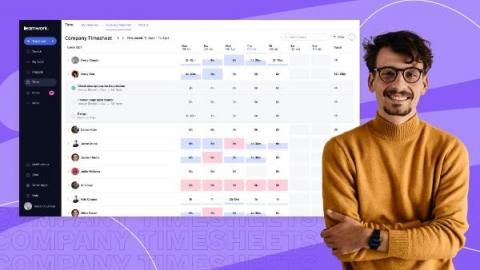
Agency time tracking software: 6 tools I've tested for client work

Every agency runs on time. Whether you bill hourly, use retainers, or run fixed-fee projects, knowing where your team's hours actually go is the difference between profitable delivery and slow-motion margin erosion. Before I joined Teamwork.com, I spent years at agencies wrestling with exactly this problem: timesheets submitted days late, hours logged to the wrong project, and month-end reviews that felt more like forensic accounting than business management.

The COO's Guide to Measuring ROI with Workforce Analytics

Most COOs can tell you their revenue per employee. Far fewer can tell you why that number moved last quarter, or where it is heading next. Workforce decisions made without data carry a real and recurring cost, including avoidable turnover, idle headcount, overtime bleed, and compliance exposure, all of which only show up once it is too late to act on them.