

Teams | Collaboration | Customer Service | Project Management

Employee Turnover Statistics: Why Employees Leave and What Makes Them Stay

A team can look stable on paper while its employees are quietly considering their next move. People attend meetings, meet deadlines, and keep projects running. What the headcount report cannot show is whether they still see a future with the company. That’s why employee turnover statistics need context. Resignations tell employers who has already left. Engagement surveys, job-search intentions, and employee experience research can reveal what’s happening among the people who are still there.


Coworking Statistics: How Companies and Employees Use Shared Workspaces

You leave the house because you need a quiet place to work. An hour later, you’re in a shared workspace, wearing headphones while someone nearby explains their quarterly targets on a video call. Then, over coffee, a conversation with another member helps you solve something you’ve been stuck on all week. Both experiences can happen in the same place.

How Team Communication Improves Long-Form Content Creation

Creating high-quality long-form content takes more than strong writing skills. Blog articles, industry guides, reports, and thought-leadership pieces often require research, subject-matter expertise, editing, fact-checking, and approval from multiple people. When these activities happen in separate conversations and disconnected tools, content teams can lose time, overlook feedback, and struggle to maintain consistency.

Employee Feedback: 10 Statistics That Explain Why Timing Matters

An employee sends over a piece of work they care about. They check their messages, wondering what their manager thinks. A day passes. Then a week. The next assignment arrives, but the feedback never does. At first, they wonder whether the work was good enough. Eventually, they stop asking. They still finish their tasks, but become less willing to suggest improvements or volunteer for something difficult. Extra effort starts to feel like sending a message nobody reads.

Operator, I need an exit from Big Tech calls

MatrixRTC has landed and Element Call takes off! All good things come to those who wait! MatrixRTC is finally here: the world’s first decentralised, end-to-end encrypted (E2EE), multiparty VoIP protocol. For messaging, decentralisation is a strength. Messages get through even when servers drop offline or networks split, and everything syncs when they reconnect. Voice and video also need low latency, though: a word that arrives two seconds late is no use to anyone.

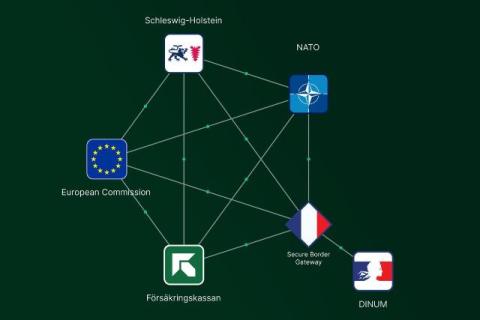
"Matrix, come here." The world's first cross-border government federation demo

On 10 March 1876, in a Boston laboratory, Alexander Graham Bell spoke into his new instrument: "Mr. Watson, come here, I want to see you." Thomas Watson, in the next room, heard every word. Two people, separated by a wall, had spoken through a wire for the first time, and the world's communications have never been the same. On 21 October 2026, in a Malmö hotel, we saw a similar breakthrough demonstration.