
Teams | Collaboration | Customer Service | Project Management

How to spot at-risk projects before margin goes

Knowing how to spot at-risk projects before margin goes comes down to one weekly check: what each project has spent against what it has delivered. Before I joined Teamwork.com, I worked agency-side, where clients kept asking for more inside the same retainer and nothing in our process recovered the cost. The lesson stuck: by the time a report said overspent, the decision behind it was long past cheap to fix. This guide gives you four leading signals with thresholds, a worked example and the fix for each.

Zero Trust Security: Principles, Benefits & Implementation

Zero trust security is a cybersecurity approach that requires organizations to verify users, devices, and applications before granting access to sensitive resources. As enterprises adopt cloud services, support remote employees, and collaborate with other departments and external partners, security teams have to manage more identities, devices, and access points. Zero trust helps with that.

7 workload management tools that show who's actually free

Workload management tools earn their place when they show who's actually free, person by person, and whether the next project fits before you say yes. Plenty of tools display workload, but far fewer show it honestly enough to staff and price from. Before I joined Teamwork.com, I spent nine years in agency account teams, and during busy periods it was often the same few people staying late while others left on time. That imbalance, more than the total workload, is what burned people out.

Professional services billing: how to pick the model that protects your margin

Your billing model decides who pays when an estimate turns out wrong, so choose it per engagement rather than by habit. Professional services billing is how a professional services firm turns delivered hours, phases or ongoing access into invoices a client agrees to pay. Before I joined Teamwork.com, I managed agency accounts where underbidding at the pitch caused most of the scope disputes that followed. That's why this guide treats the model as a risk decision.

What Employee Monitoring Software Actually Tracks (and What It Cannot)

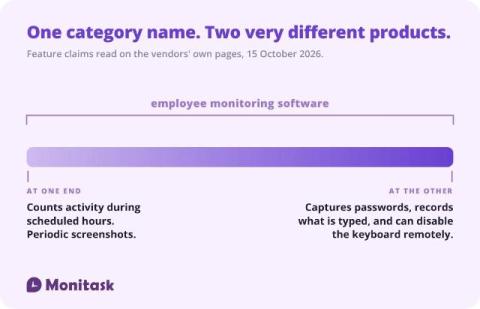
The category name covers two very different products. At one end, software that counts keyboard and mouse activity during scheduled hours and takes periodic screenshots. At the other, software that logs the content of what is typed — including passwords and card numbers — records the screen continuously, and can remotely block an employee’s keyboard. Both are sold as employee monitoring software. Decide which one you are buying before comparing prices.

Job Costing: How to Calculate the True Cost of a Job

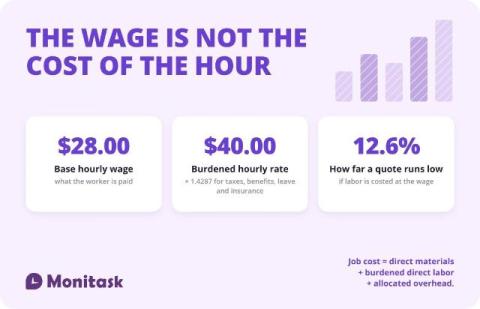
Job costing calculates the total cost of one specific job by adding three figures: direct materials, direct labor at a burdened rate, and an allocated share of overhead. A $28 hourly wage costs roughly $40 once employer benefits are included, so job costs built on base wages run about 12% low. Contractors, agencies, manufacturers and professional services use it to price work and measure margin per job.

Is Employee Monitoring Legal? What Employers Can and Cannot Do

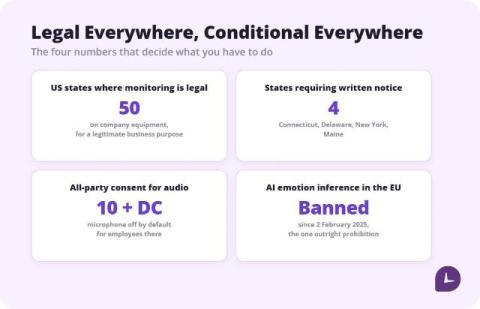
Employee monitoring is legal in all 50 US states and in most other countries, but legality depends on how it is done rather than whether it is done. On company-owned equipment during work hours, with a written policy in place, monitoring is broadly permitted under federal law. Four states require written notice first. Audio recording, biometrics and personal devices each have separate rules, and the EU treats employee consent as unreliable by design.

Open Source Employee Monitoring Software: What You Take On

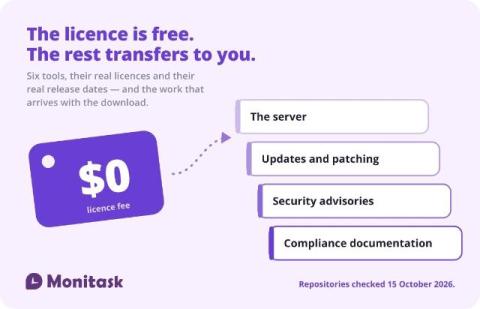
Open source monitoring tools are free to licence and not free to run. The licence question matters more than most guides admit — one popular option is under SSPL, which is not an OSI-approved open source licence, and one widely listed “open source” tool has no licence file at all. Two of the tools that appear on every list are not employee monitoring software in any sense their own authors would recognise.

Employee Feedback: 10 Statistics That Explain Why Timing Matters

An employee sends over a piece of work they care about. They check their messages, wondering what their manager thinks. A day passes. Then a week. The next assignment arrives, but the feedback never does. At first, they wonder whether the work was good enough. Eventually, they stop asking. They still finish their tasks, but become less willing to suggest improvements or volunteer for something difficult. Extra effort starts to feel like sending a message nobody reads.