

Teams | Collaboration | Customer Service | Project Management

How Working Remote May Have Helped Twitter's Hackers

The takeover of high profile Twitter profiles last month on July 15 made headlines when public figures like former President Barack Obama, Jeff Bezos, and Elon Musk began announcing that they wanted to “give back” to the community. But instead of making a donation to a COVID-related charity or something similar, they were promising that if people would send them Bitcoin, then they would return twice as much as they were given.

A vision for every Element in the NHS Matrix

The NHSX and National Commercial and Procurement Hub has announced its Clinical Communications Procurement Framework. The initiative is aimed at helping NHS trusts phase out pagers and reduce reliance on email by the end of 2021, by adopting modern communication tools. To be included on the Framework, technologies needed to be able to demonstrate that they save time for individuals and teams, support patient transfers of care, and are scalable across the NHS.

Three tips to ensure successful adoption of Asana

A year ago, the leadership team at The Seattle School of Theology & Psychology, a graduate school and seminary in the heart of Seattle, decided to implement Asana for our administrative teams. One of our strategic goals that year was to build effective systems and structures to support dynamic collaboration. We had been through some significant transitions and were preparing for growth in the pivotal areas of digital products and online programs.

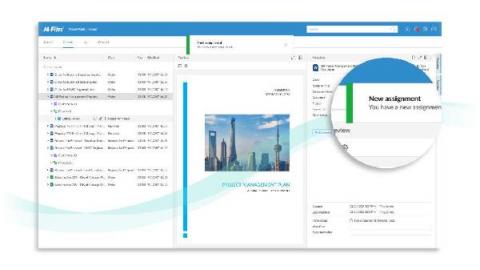
Filling the Gaps in Office 365 and Microsoft Teams with Information Management

At this point, remote work isn’t just a common part of our lives. It’s essentially a ubiquitous one, thanks to the impact of the unexpected and ongoing COVID-19 pandemic. Even businesses that hadn’t embraced telecommuting in the past were forced to confront this tech-driven future sooner than expected, which has led them to turn to a wide variety of different solutions in an attempt to meet their needs.

Top 7 Tempo Alternatives (Features, Pricing, Ratings)

Looking for the best Tempo alternatives? While Tempo is a decent automated time-tracking solution to monitor your employee’s productivity, it’s not the best solution available today. As Tempo mainly focuses on productivity monitoring in Jira, it lacks integrations with other project management software like Trello or ClickUp. Additionally, Tempo doesn’t allow you to pay via quarterly or annual intervals for added ease of use.

Top 5 Clicktime Alternatives (Features, Pricing, Ratings)

Searching for an excellent Clicktime alternative? Clicktime is a useful time tracking and employee productivity tool that’s used by companies to manage work time and record employee timesheets. However, it has its fair share of drawbacks. For example, it can’t track employees’ web and app activity usage and also lacks integrations with popular tools like GitHub, WordPress and Todoist. And these are just some of the issues highlighted in most Clicktime reviews.

How do you measure teamwork?

For many of us, the way we work has changed since the start of 2020. We’ve had to adapt to the unexpected, embrace remote working, and learn to keep work going even when we’re not all in the same office space. But among all the uncertainty, one thing has become clearer than ever: even when we’re apart, we’re all in this together. And teamwork has never been more important.