

Teams | Collaboration | Customer Service | Project Management

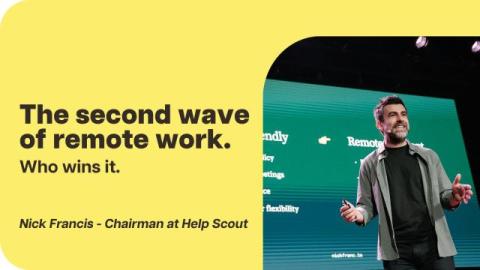
Remote-friendly is not enough anymore. Here's what remote-excellent looks like

The first wave of remote work had a low bar. Companies went remote because a pandemic gave them no choice. Being remote at all was the differentiator. The second wave is different. It is voluntary, which means it is competitive. Companies now choose whether to offer remote flexibility. Which means the employees choosing to work for them have genuine alternatives. According to Buffer, 98% of workers want remote work at least some of the time. 46% would consider leaving if forced back to office full-time.

WhatsApp in Social Care: The Compliance Risk and What Replaces It

It's a familiar story. A social worker gets a message from a client on a Saturday. A family needs to move a home visit. A colleague forwards a photo of a document that has to be dealt with before Monday. None of it goes through an official system. All of it goes through WhatsApp, because that is where the client already is, and because it works.

A Device Provisioning Checklist for Remote Teams'

Most organisations can describe their hiring process in detail and their device process not at all. The laptop is ordered, it arrives at an address nobody has visited, and somewhere between the courier and the first standup a set of decisions gets made by whoever happens to be available. That is how a distributed team ends up with eleven slightly different machines.

AI-First Enterprise: How AI Is Changing the Way Businesses Work

Over the past year, many companies have moved from simply experimenting with AI to integrating it into their core business operations. From customer service and analytics to communication and workflow automation, AI is becoming an integral part of how modern organizations operate. Even companies in highly competitive digital markets, such as eSIM Plus, are increasingly looking for ways to use AI to make their products, services, and customer experiences more efficient.

10 Help Desk Workflow Examples to Implement Right Away

Navigating the complexities of IT Service Management (ITSM) can be challenging, but mastering help desk workflows can make all the difference. They are the backbone of efficient service operations, ensuring that tasks are handled swiftly and consistently. In this article, we’ll dive into the world of service desk processes, highlighting how workflow automation can revolutionize your operations.

How to Turn a Brainstorm into a Prototype in Miro

Great brainstorms produce great sticky notes that usually go nowhere. In this video, we show you how to select everything from your session, write a specific prompt that captures your team's collective thinking, and watch Miro AI generate a prototype that actually reflects the ideas your team just discussed, not a generic starting point. From brainstorm chaos to tangible prototype. Same session. Same board.

How Teamwork Graph Helps AI Agents | Teamwork Graph | Atlassian

This is video is part of the Teamwork Graph benchmarking series being launched by TWG PM/PMM. It is in support of the soon to be released Teamwork Graph benchmark report blog. About Atlassian: Behind every great human achievement, there is a team. From medicine and space travel to disaster response and pizza deliveries, we help teams all over the planet advance humanity through the power of software. Our mission is to help unleash the potential of every team.

Margin control for professional services: the ops system that protects delivery profit

Margin control is not a finance vocabulary quiz. In professional services, it is the operating system that decides whether a client project still pays for itself while your team is still delivering it. I spent years on the delivery side of agencies watching "healthy" projects quietly bleed. The decks looked fine, the status calls sounded fine, and then finance closed the month and the delivery margin was gone.