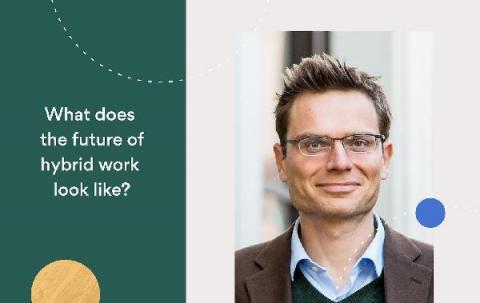


It’s likely that you are already exploring the challenges and possibilities of the “new normal.” As the world begins to reopen, it’s clear that things have changed. And with every change comes a new opportunity (and even responsibility) to improve — as individuals and as companies. While our understanding of where things are headed is in constant flux, one trend is clearly emerging that’s top of mind for business leaders across the globe.
Many companies are basing their hybrid or remote work strategy on instinct. Yet it’s dangerous to let your intuitions or, worse, your biases drive your strategy. The companies that will thrive as they transition to new hybrid and remote work models will adopt a data-driven approach. As a leader, here’s how to use data, not your gut, to make important decisions about your remote or hybrid work strategy moving forward.
This article originally appeared on Inc. As a leader, hybrid and remote work are likely top of mind. But when leaders talk about hybrid and remote work, they often mince terms. There are many hybrid and remote work models—it’s important to get clear on what you’re actually talking about. Here are five of the most common hybrid and remote work models that leaders are contemplating.
This article originally appeared on Inc. In 2021, the hybrid work model became top-of-mind for business leaders. No wonder—the majority of knowledge workers (72%) say that, moving forward, they prefer a hybrid approach and a mix of remote and office work. And while the payoffs can be enormous, going hybrid is risky, especially because it can perpetuate a two-tier work environment.
Discover some of the surprising lessons company leaders discovered about staff productivity in their switch to a hybrid work model!
In a digital-first work world, team engagement has never been more important; here are three ways to forge deeper teamwork in Slack.