

Teams | Collaboration | Customer Service | Project Management

XRP and the Renewable Energy Market: Kickstart Your Path to Retirement

Combining renewable energy infrastructure with digital asset technology based on XRP enables the creation of a unique and complementary "Core-and-Satellite" architecture for your pension portfolio. On one hand, real-world clean energy assets-such as utility-scale solar farms, wind farms, and energy storage systems-can secure long-term, stable Power Purchase Agreements (PPAs), generating predictable cash flows with an inherent hedge against inflation. On the other hand, XRP provides efficient on-chain settlement and supports the tokenization of Real-World Assets (RWAs).
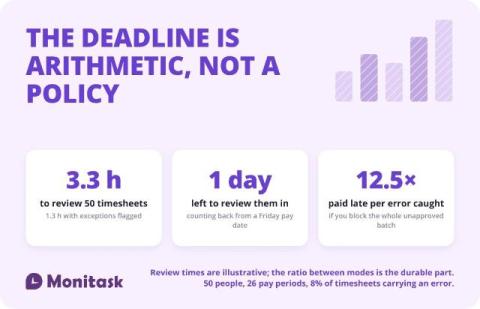
Timesheet Approval Process: Who Approves, By When, and What It Means

The timesheet approval process is the set of steps between an employee recording hours and those hours reaching payroll: submission, review, correction, approval and period close. The deadline is not chosen, it is counted backwards from pay date. The review is not a matter of diligence, it is a matter of how many hours the approver has.

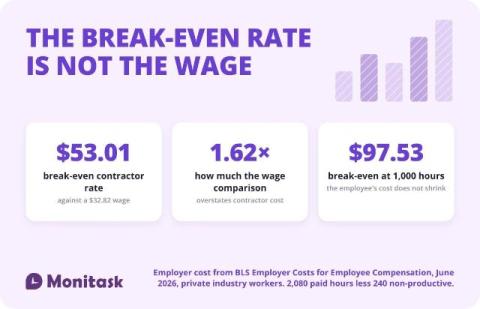
Contractor Time Tracking: What to Track and What It Means

Contractor time tracking records hours against work rather than against a schedule. The distinction matters beyond bookkeeping: the IRS asks whether a business controls “or has the right to control what the worker does and how the worker does his or her job,” so a system that sets a contractor’s hours is itself a factor. And the rate at which a contractor stops being cheaper than an employee is $53.01, not the $32.82 an employee earns. > This is not legal or tax advice.

Paid Hours Vs Billed Hours: Where BPO Margin Quietly Leaks

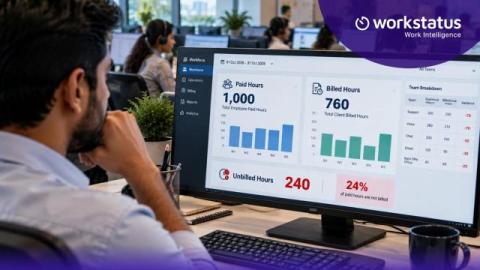
Say an agent works a 9-hour shift. You pay for all 9 hours. But you can bill the client for only 7. Those 2 hours are a cost you never get back. Now picture that across every agent and every shift. That’s where BPO margin quietly leaks. Most teams don’t spot it until month-end, when the numbers don’t add up. It doesn’t have to stay hidden. With Workstatus, you can match each paid shift to the right client account as the work happens.

How to monitor employees working from home (without losing their trust)

November 2, 2026 Quick overview: To monitor employees working from home without losing their trust, set expectations and capture only the data each role needs. Then let employees see the same data you do. Time Doctor, used by 10,000+ distributed teams, shows the time, tasks, and tools behind each workday as it happens. This guide covers six steps: expectations, what to capture, one live view, results, check-ins, and well-being.

GPS Time Clock for Employees: Accuracy, Geofencing, and the Law

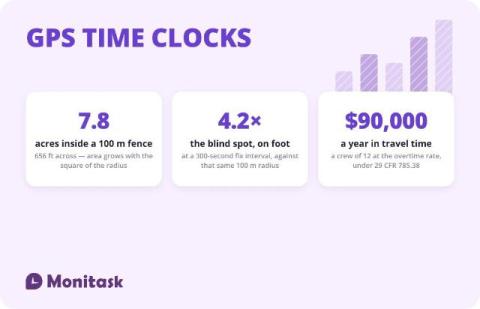
A GPS time clock records a location alongside each clock-in and clock-out, so a timesheet carries where the work started as well as when. It answers the attendance question for field crews that a desk time clock cannot. It does not provide continuous proof of presence: the accuracy figures in circulation measure the satellite signal rather than a phone, and a geofence confirms position at the moment of a fix rather than detecting the moment someone leaves. > This is not legal advice.

The 10 best AI agents for business in 2026, by use case

This comparison is written by Asana, and Asana AI Teammates are assessed against the same criteria as every other tool. Your ops lead wants an AI agent that can triage incoming requests, but your marketing team needs a tool that can draft a campaign brief from a single prompt. Your IT, HR, engineering, and project management office (PMO) teams all need agents that assist or autonomously complete tasks, too.

DCAA Timekeeping Requirements: What the Regulations Actually Say

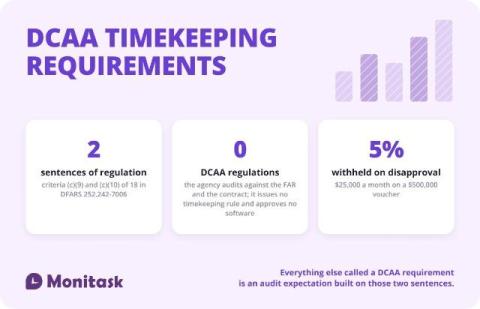
The Defense Contract Audit Agency issues no timekeeping regulation. The requirements come from the contract: DFARS 252.242-7006(c)(9) and (c)(10) require a timekeeping system that identifies labor by cost objective and a labor distribution system that charges direct and indirect labor correctly. Everything else called a “DCAA requirement” is audit practice derived from those two criteria and from the FAR cost principles.