
Teams | Collaboration | Customer Service | Project Management

How to monitor employees working from home (without losing their trust)

November 2, 2026 Quick overview: To monitor employees working from home without losing their trust, set expectations and capture only the data each role needs. Then let employees see the same data you do. Time Doctor, used by 10,000+ distributed teams, shows the time, tasks, and tools behind each workday as it happens. This guide covers six steps: expectations, what to capture, one live view, results, check-ins, and well-being.
GPS Time Clock for Employees: Accuracy, Geofencing, and the Law

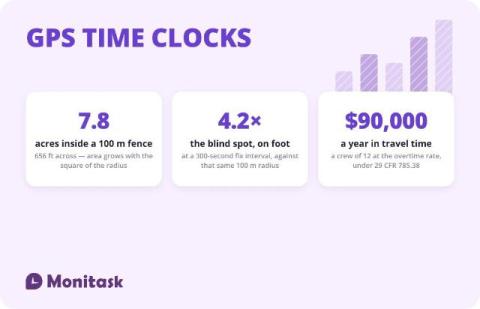
A GPS time clock records a location alongside each clock-in and clock-out, so a timesheet carries where the work started as well as when. It answers the attendance question for field crews that a desk time clock cannot. It does not provide continuous proof of presence: the accuracy figures in circulation measure the satellite signal rather than a phone, and a geofence confirms position at the moment of a fix rather than detecting the moment someone leaves. > This is not legal advice.

The 10 best AI agents for business in 2026, by use case

This comparison is written by Asana, and Asana AI Teammates are assessed against the same criteria as every other tool. Your ops lead wants an AI agent that can triage incoming requests, but your marketing team needs a tool that can draft a campaign brief from a single prompt. Your IT, HR, engineering, and project management office (PMO) teams all need agents that assist or autonomously complete tasks, too.

DCAA Timekeeping Requirements: What the Regulations Actually Say

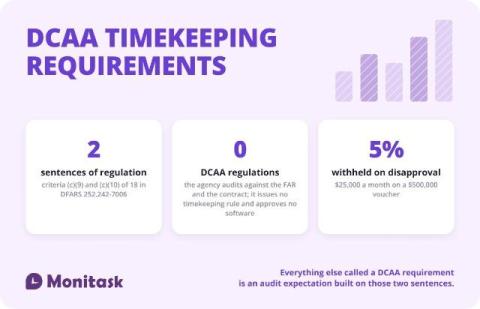
The Defense Contract Audit Agency issues no timekeeping regulation. The requirements come from the contract: DFARS 252.242-7006(c)(9) and (c)(10) require a timekeeping system that identifies labor by cost objective and a labor distribution system that charges direct and indirect labor correctly. Everything else called a “DCAA requirement” is audit practice derived from those two criteria and from the FAR cost principles.

Employee Monitoring Policy Template

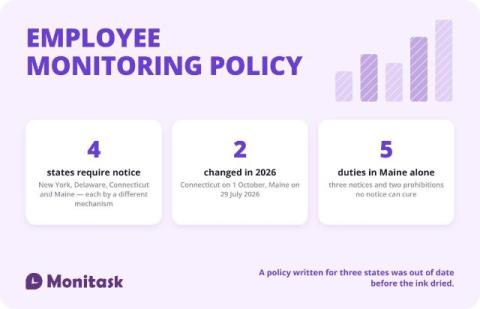
An employee monitoring policy is a written document that tells employees what the employer monitors, why, where, how long the data is kept and who can see it. Four states — New York, Delaware, Connecticut and Maine — require notice before monitoring begins, each by a different mechanism, and two of those four laws changed during 2026. The template below is free to copy in three formats, and the sections marked with brackets are the ones you replace.

Support to Engineering Handoff: How to Stop 'Black Hole' Requests

A “black hole” request is a ticket that gets escalated to engineering and then disappears. The agent can’t see progress, the developer can’t see the customer, and nobody tells the requester when it’s fixed. It usually happens because support and engineering live in two tools joined by copy-paste.

Agency Time Tracking: What to Track and What It Tells You

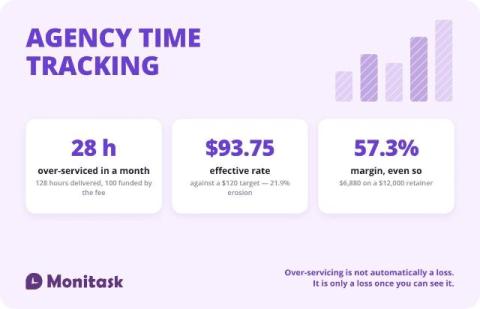
Agency time tracking exists to answer one question: did the fee cover the work. A $12,000 monthly retainer at a $120 target rate funds 100 hours. Deliver 128 and the effective rate drops to $93.75, with 28 hours of over-servicing worth $3,360. Hours by client, by role and by activity are what turn a retainer into a margin number.