Teams | Collaboration | Customer Service | Project Management

The latest News and Information on Project Management, Methodologies, Productivity and Tools.
How Law Firms Track Billable Hours: Increments, Codes and Compliance

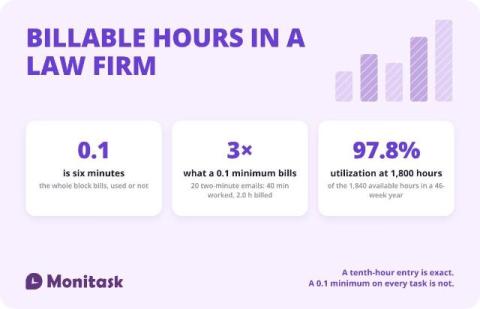
Law firms bill time in tenths of an hour: six minutes is 0.1. Each entry carries a matter number, a timekeeper, the time, and a description of the work. Firms acting for corporate clients and insurers add UTBMS task codes and submit invoices in the LEDES format. The ABA Model Rules require the fee to be reasonable and the basis for it to be communicated to the client — and say nothing at all about rounding, which is where most of the trouble starts.

Agency Time Tracking: What to Track and What It Tells You

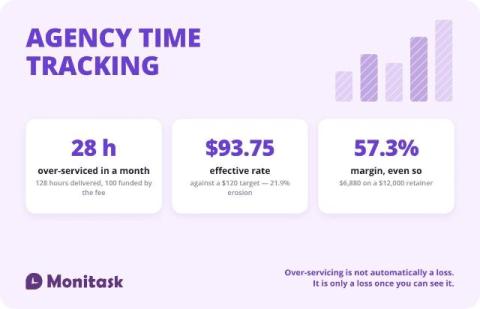
Agency time tracking exists to answer one question: did the fee cover the work. A $12,000 monthly retainer at a $120 target rate funds 100 hours. Deliver 128 and the effective rate drops to $93.75, with 28 hours of over-servicing worth $3,360. Hours by client, by role and by activity are what turn a retainer into a margin number.

Support to Engineering Handoff: How to Stop 'Black Hole' Requests

A “black hole” request is a ticket that gets escalated to engineering and then disappears. The agent can’t see progress, the developer can’t see the customer, and nobody tells the requester when it’s fixed. It usually happens because support and engineering live in two tools joined by copy-paste.

Project Management Dashboard: Metrics, Formulas and How to Build One

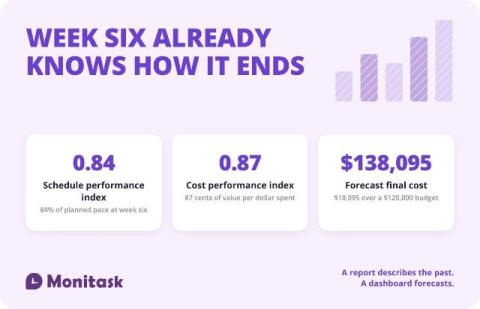
A project management dashboard shows the few numbers that tell you whether a project will finish on time and on budget. The core set is schedule variance, cost variance, the schedule and cost performance indexes, and a forecast of final cost. All four come from three inputs: the budget, the percentage of work actually complete, and the cost incurred to date.

How to Track Project Progress: Methods That Give You a Real Number

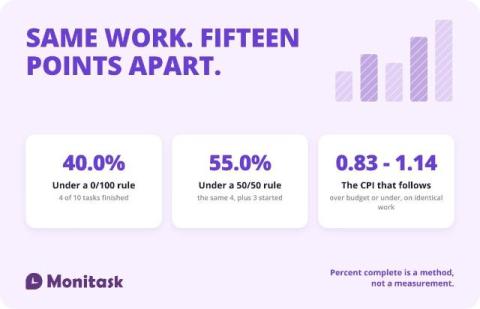
Tracking project progress means producing one defensible number: the percentage of planned work actually finished. That number depends on the method used to credit partially finished work, and the choice changes the answer. A project with four of ten tasks done reads 40% under a 0/100 rule and 55% under a 50/50 rule — the same work, fifteen points apart.

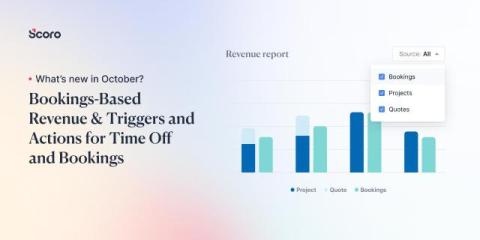
What's New in October 2026: Bookings-Based Revenue & Triggers and Actions for Time Off and Bookings

Is it already the end of October? Wow. Time truly flies when our team is busy working on updates. This month, there are tons of useful improvements for everyone! You can now see what your resource bookings are worth with the new bookings-based revenue, and set up automated rules about time off and bookings. And that’s not all – from task dependencies in the project task list to subtasks in task bundles, there’s plenty more below.

Who keeps the gains? The question reshaping construction project management.

Meet Pula, a mountain guide who has led expeditions up the same peak forty times in fifteen years. Pula knows which routes turn dangerous once the afternoon weather rolls in. He knows the camp where teams always underestimate the altitude, and the north facing shortcut that looks faster on paper and costs two days every single time. He has watched expeditions fail for the same reasons, in the same places, at roughly the same point in the climb.

AI in professional services statistics (2026): 30+ data points from SPI Research

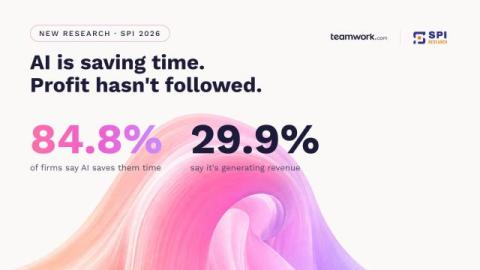
AI is used on 43.6% of professional services projects in 2026, nearly double the 23.1% in 2025, according to SPI Research's 2026 Impact of AI on Professional Services study of 245 firms. But the payoff is uneven: 84.8% of firms say AI saves them time, while only 29.9% say it generates revenue. The study covers management and IT consultancies, professional services teams inside software and SaaS companies, and other professional services firms across the Americas, EMEA and APac.

AI in professional services is leaking margin. Here's how to plug it.

Every services firm I talk to is measured on three things: delivering on time, keeping billable utilization healthy, and delivering projects profitably without over-servicing. AI should help with all three. So far, it's helping firms deliver faster. It isn't yet making them more profitable. SPI Research's 2026 Impact of AI on Professional Services study shows the gap. AI now touches 43.6% of projects, nearly double a year ago, and firms using it on most of their projects deliver far more of them on time.