

Teams | Collaboration | Customer Service | Project Management

The latest News and Information on Project Management, Methodologies, Productivity and Tools.

Free employee attendance sheet templates (Excel, PDF and Google Sheets)

November 11, 2026 Quick overview: An employee attendance sheet records who worked, when they started and stopped, and how many hours they put in each day, week or month. Below, you can download three free templates in Excel, PDF and Google Sheets. You will also learn what each sheet should include, how to fill it out and where manual sheets fall short. For teams whose hours feed payroll, client billing or a compliance review, a verified time record removes most of that manual work.

Monitoring employee attendance: 4 methods, 5 steps, and records that hold up

November 9, 2026 Quick overview: Monitoring employee attendance works best when every hour your distributed team logs has a verified record. Time Doctor keeps that record, so payroll, billing, and process compliance can rely on it. That matters because 3.2% of full-time U.S. employees miss work time in an average week (BLS, 2025). Payroll runs on attendance data. So do client billing, overtime planning, and most staffing decisions.

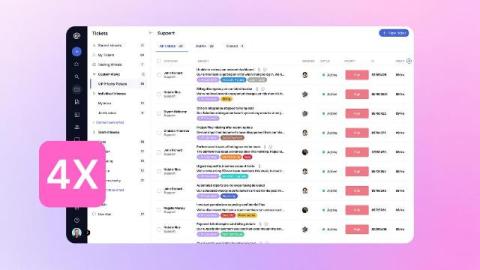
Custom views in Teamwork Desk now load up to 4x faster

If your support team juggles dozens of custom views or handles a high volume of tickets, those views now load up to 4x faster. We've rebuilt how custom views work in Teamwork Desk, and the improvements are already live in your account. You don't need to lift a finger. Here's what changed, why it matters, and what you'll actually notice day to day.

8 best KPI dashboard software tools for delivery teams in 2026

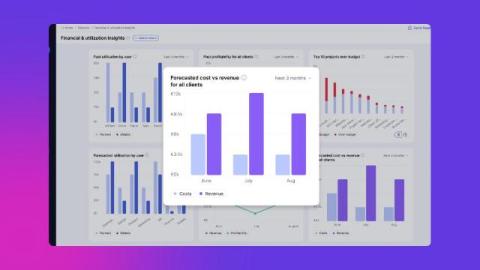
The best KPI dashboard software for a delivery team calculates its numbers where your team records time, cost rates and budgets. Every delivery KPI is built from those inputs, so a dashboard is only as current as the timesheets underneath it. On my team at Teamwork.com, requests always outnumber our hours, so I decide what gets delivered by its expected contribution to pipeline and revenue.

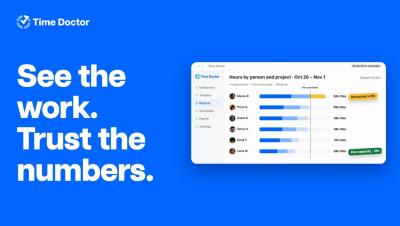
Status updates and gut feel? See the work. Trust the numbers.

Most leaders of distributed teams run on status updates and gut feel. Time Doctor gives you one clear view of how your distributed team actually works. In this video: Chapters Time Doctor is used by 10,000+ distributed teams. Product screens are illustrative, with sample data.

Time Doctor AI: Answers, Not Exports | Ask Your Data Anything

Who's stretched, and who has capacity? Ask in plain language and get the answer in seconds, from your team's real tracked hours. No exports. No spreadsheet rebuild. Time Doctor AI is on every plan. Use it in Time Doctor or right inside the AI tools you already use: Microsoft Copilot, Claude, ChatGPT and Gemini. What you can ask: Built to hold up: permissions are set for each person, and every number is computed from your tracked hours, never guessed. Time Doctor holds ISO 27001 and SOC 2 Type 2 certifications and supports GDPR and HIPAA requirements.

The business case for switching to a PSA: a five-step payback test

The business case for switching to a PSA comes down to three of your own numbers: what staying costs, what switching costs and how fast it pays back. Approve the switch if it still pays back in under 12 months when adoption goes half as well as planned, and pilot first if it doesn't. I work at Teamwork.com now, but in my agency roles clients asked for more inside the same retainer, and nobody priced it, so staying always looked free.

7 Best Project Management Software for Agencies That Track Budgets and Billing

What are the criteria for this guide? Client-based project management. Projects grouped by client, with tasks, assignees and deadlines. Tags or a text field for the client name don’t count. Native time tracking. Time logged against projects or tasks inside the tool. A separate tracker bolted on through an integration doesn’t count. Project budgets. A budget per project, in hours or money, tracked against logged time. A custom number field doesn’t count. Actively developed.

Schedule Variance Formula: What SV Measures and Where It Fails

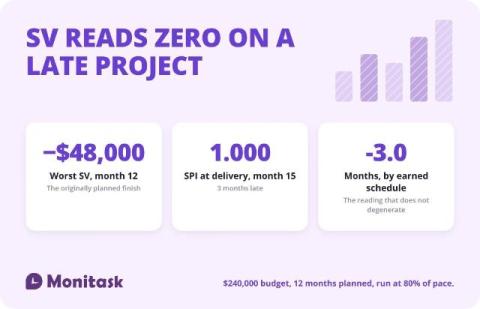
Schedule variance is SV = EV − PV: earned value minus planned value at a point in time. Negative means behind plan. The result is in currency, not days, and it has a property most explanations omit — as a project finishes, earned value converges on planned value, so SV approaches zero and the schedule performance index approaches 1.0 even when the project is late.