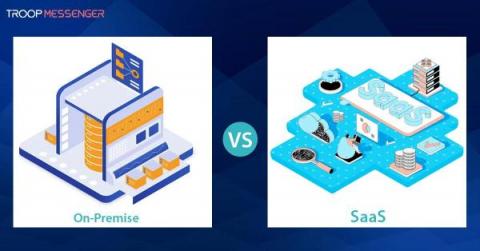
Let's check the facts first, then move on to learning about the on-premises server. Do you comprehend that data is traded for more money than gold on the black market? Tech-savvy people were completely omniscient about how the world was changing and how vulnerabilities, threats, and other issues will be intertwined with achievements pertaining to technology.
Distance learning tools provide students with flexibility and convenience, enabling them to take courses at their own pace. In addition, it offers the opportunity to gain valuable knowledge and skills while still retaining the freedom to pursue other interests or commitments. Even through a computer screen, online collaborative learning tools can keep students interested and engaged. For all these reasons, it is not surprising that online education is continuing to grow.
Software as a service (SaaS) and cloud-based tools have become critical for companies to stay competitive and agile. Modern Saas tools, like Salesforce, have become crucial for companies to collaborate efficiently. Public cloud providers have made it easy for businesses to use these tools. However, this shift to the cloud has led to some serious cybersecurity challenges. The data security parameters have shifted from traditional, on-premise security to cloud-first.
Today, businesses must protect sensitive customer and business data from cyber threats. Detecting threats has become more challenging since hackers always devise new ways to access sensitive data.
Today’s cybersecurity environment is complex. As it seems that the world is becoming more open and trusting, organizations are doubling down on security measures. A zero-trust approach is common among security-oriented organizations. Why is zero trust a good thing? We’ve asked an expert: Ian Mortimer, Senior VP of Technology at Pexip. There are countless important conversations, critical decisions, and strategic discussions happening right now over video technology.
When businesses process customer data, they are responsible for keeping it secure under Australia’s Privacy Act. If the information relates to anyone from Europe, the general data protection regulation (GDPR) also applies. Both regulations demand that organisations appropriately manage the personally identifiable information (PII) they hold. In addition, the Australian government has stipulated that businesses must address the significant increase in data breaches over the past two years.
As of 2022, all sizes of businesses face increased cybersecurity risks due to the rising number of remote employees, SaaS applications, and cloud services. To handle these complexities and protect all corporate assets from cyber attacks, businesses need various cyber security tools that will secure identities, devices, networks, and cloud environments. Let’s explain these modern security solutions and compare them.