
Teams | Collaboration | Customer Service | Project Management

AI at scale: powering the digital workplace (summit recap)

Most enterprise AI programs don’t fail at the model level. They fail at the foundation — the data strategy, governance model, access controls, and measurement discipline that determine whether a pilot ever becomes a production system. The organizations scaling AI well did the unglamorous work first.
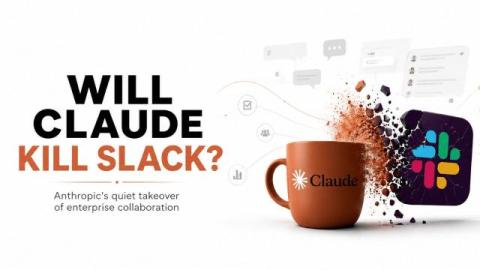
Claude Tag: Anthropic's Slack Takeover?

On June 23, 2026, Anthropic launched a product that should keep Slack’s leadership awake at night, and it launched it inside Slack itself. Claude Tag lets any employee mention @Claude in a Slack channel and hand it real work: watch threads, draft documents, fix code, chase forgotten follow-ups. It doesn’t behave like a bot. It behaves like a colleague, one that never sleeps, never forgets what was said in the channel last Tuesday, and never needs to be trained twice.

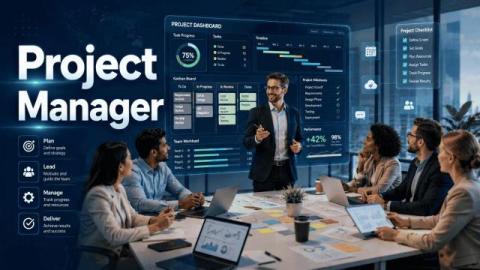
Project Manager: Who They Are, What They Do, and Why It Matters

A Project Manager is the professional responsible for planning, coordinating, and delivering a project on time, within budget, and according to the agreed scope. They oversee people, processes, timelines, and resources to ensure projects achieve their intended goals while minimizing risks and keeping stakeholders informed.

What an AI Contact Center for Financial Services Looks Like Inside Microsoft Teams

Customers have learned to expect that service should work like a conversation: describe the problem in plain language, get it resolved. Tools like ChatGPT and Gemini set that bar, and most contact centers fall short of it. The obvious fix is to add AI, yet MIT's NANDA initiative found that around 95 percent of enterprise generative AI pilots never reach measurable value. So the question worth asking is not whether to put AI into customer service.

Intranet leadership: how executive vision and collaboration increase engagement

Your intranet can showcase beautiful branding and engaging content, but it still needs internal champions and partnerships to succeed. The organizations recognized by the 2026 Simpplr Employee Experience Excellence Awards demonstrate how executive visionaries, technical experts, and cross-functional collaboration create intranets that deliver results.

How to Manage Remote Employees: The Honest, Practical Guide That Actually Works in 2026

Managing remote employees requires clear expectations, structured communication, transparent time tracking, outcome-focused productivity measurement, and the right tools to improve accountability, engagement, and performance.

9 Asana alternatives we tested for managing client work in 2026

A few years back, I was managing six client accounts at once with a stack of tools that didn't talk to each other. Time tracking in one app, project tasks in another, and a spreadsheet held together by hope to figure out whether any of it was actually profitable. That setup cost us hours every week in manual reconciliation, and we still missed billing for work that fell through the cracks.

The best PSA software for MSPs in 2026 (and how to choose the right one)

Before joining Teamwork.com, I spent years running delivery at agency firms. Back then, "PSA" meant either an overpriced system nobody wanted to use or a Frankenstein stack of spreadsheets and disconnected apps. The ticketing tool didn't talk to the billing tool. The billing tool didn't talk to the project tracker. And the project tracker was, let's be honest, a shared Google Sheet held together by hope.

Employee Availability: Meaning, Examples & How It Works

Employee availability refers to the days and times an employee is able or willing to work. Teams use availability to support staffing, shift coordination, schedule planning, and attendance visibility. The term differs from a work schedule, which refers to the specific shifts or hours an employee is assigned and expected to work.

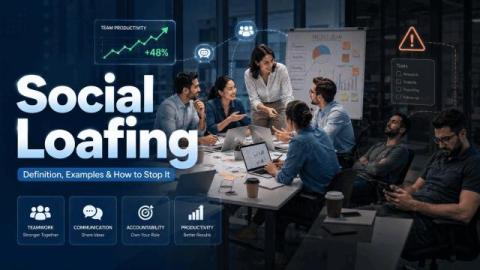
Social Loafing: Definition, Examples & How to Stop It

I've watched it happen more times than I'd like. A group comes together, everyone nods through the kickoff call, and then somewhere between that first screen-shared agenda and the actual deadline, two people are carrying everything while the rest quietly coast. Nobody says anything. The work still gets done, technically. But the people doing it know exactly what happened. That's social loafing. It feels unfair the moment you experience it, but somehow gets filed under "group dynamics" and left there.