

Teams | Collaboration | Customer Service | Project Management

Build vs buy project management software: the true cost for services firms

I get invited to compete against custom builds almost every week now. Not against competitor vendors. Against a team of developers, or increasingly against an AI coding tool and a founder who is good with prompts. It usually starts the same way. A services firm has a workflow that no off-the-shelf product covers perfectly. So they get a quote from a dev shop, or they spin up a build themselves over a weekend.


Task automation strategies that actually reduce your team's busywork

I've spent enough years in client services operations to know what happens when teams skip straight to buying automation tools. They automate the wrong things, or worse, they automate a broken process and just break it faster. This guide covers the strategic approach that actually works: how to audit what needs automating, prioritize the highest-ROI tasks, and build a roadmap that sticks. You'll also see where Teamwork.com fits into the picture.

Why Employee Monitoring Fails to Solve the 30% Margin Leakage Problem?

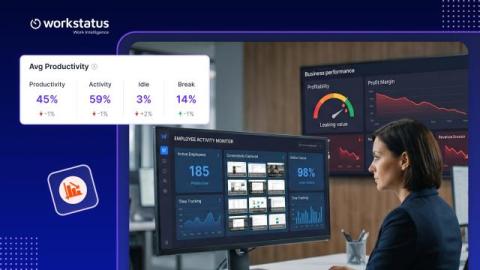
Have you ever given a thought to why project margins keep reducing even when everyone is busy? This is because being busy doesn’t guarantee equal results. Employee monitoring can tell you who is working and for how long, but it fails to tell where time, effort, and profits are being lost. In this blog, you’ll explore why employee monitoring fails to solve the 30% margin leakage problem and how service businesses should switch to productivity intelligence instead. Let’s go!!

Secure Collaboration Software for Enterprises: Features, Comparison & Buyer's Guide

Collaboration tools allow teams to coordinate projects, share information, respond to incidents, and make decisions. But most of these tools aren't secure. As cyber threats increase, employees use consumer messaging apps for work, and regulations such as GDPR, NIS2, and DORA raise compliance expectations, organizations need collaboration tools that protect sensitive communications without slowing teams down.

Encrypted Video Conferencing for Enterprises

Most enterprise video conferencing platforms claim to be encrypted. The problem is that encryption can mean very different things depending on how a platform is built. For organizations discussing sensitive business, legal, financial, or operational information over video calls, a secure video conferencing platform is crucial. But many platforms advertise security while still retaining the ability to access call content through their infrastructure.

Meet your AI-powered workplace assistant for stronger employee connections

Internal communicators don’t need more tools. We need fewer handoffs, less chaos, and more space to do the work that requires our superpowers of context, clarity, and judgment. Internal communications professionals understand the exhausting effort of balancing daily chaos. You might find yourself running three campaigns simultaneously, announcing a critical leadership transition, updating your hybrid work policy, and preparing for a quarterly town hall all at once.

Essential Digital Tools Every Remote Team Needs to Communicate and Collaborate Effectively

Remote work has moved well past the experimental phase. For millions of teams around the world, distributed collaboration is simply how work gets done now, and the question is no longer whether remote setups can work but which tools make them work best.

Building for a post-quantum world: Start your transition today with Rocket.Chat

Adversaries are capturing encrypted government and defense communications today, intending to decrypt them once quantum computers are powerful enough. This attack is called Store Now, Decrypt Later (SNDL), and it is already confirmed to be happening. ‍